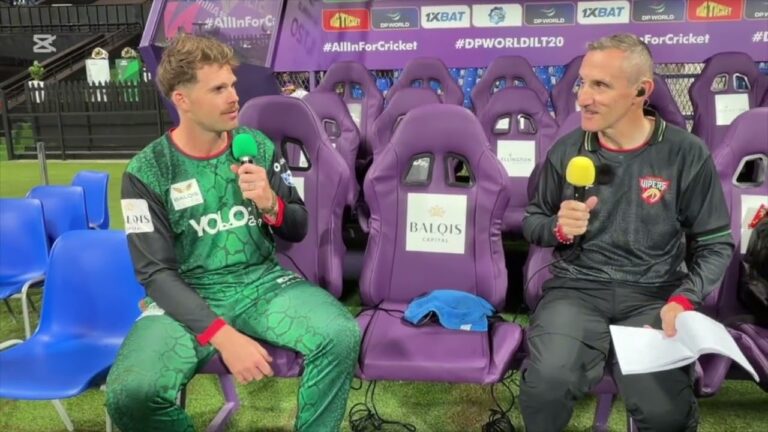
This time we hear from captain Lockie Ferguson as he reflects on defeat by the narrowest of margins, one run, against the Abu Dhabi Knight Riders in Abu Dhabi.
The loss is the Vipers’ first of this campaign after starting off with six successive victories, but the consolation is that the side is still comfortably top of the league stadings and has already qualified for the end-of-season play-offs
The Desert Vipers suffered their first defeat of Season 4 of the DP World ILT20 by the narrowest of margins – one run – to the Abu Dhabi Knight Riders (ADKR) in Abu Dhabi.
Chasing 182 to win, the Vipers needed three off the final ball, managed to score just one, thus ending their winning streak of six successive matches at the start of this edition of the tournament.
Put in to bat by the Desert Vipers, ADKR had a shaky start, losing a wicket to the first ball of their innings to Khuzaima Bin Tanveer’s brilliance. ADKR fell to 9/2 after Vipers captain Lockie Ferguson followed up with a wicket in the second over of the innings.
But an impressive recovery followed, led by Liam Livingstone and Alex Hales and later Alishan Sharafu. The Knight Riders scored 69 from their final five overs and reached 181/5 in their 20 overs.
Top-scorer for ADKR was Livingstone with 76 off 48 deliveries and UAE batter Sharafu shared a 68-run partnership with him as he scored 39 from 35 balls.
The Desert Vipers’ run chase began well through a 97-run opening partnership between Max Holden (52 off 43) and Fakhar Zaman (44 from 32), but thanks to some disciplined and clever bowling from ADKR they were able to pull back the advantage and script a dramatic win.
Match Scores:
Toss: Desert Vipers
Abu Dhabi Knight Riders: 181/5 (20 overs)
Top scorer: Liam Livingstone 76 (from 48 deliveries)
Desert Vipers: 180/6 (20 overs)
Top scorer: Max Holden 52 (43)
Match Result: ADKR won by 1 run. Player of the Match: Liam Livingstone
Here are some quotes from the Vipers Voices post-match vodcast and podcast featuring Desert Vipers captain Lockie Ferguson:
On the narrow defeat by just one run to ADKR:
“I think our fans are probably getting used to close games, so we are certainly playing an entertaining brand of cricket but yes, one run. It is one of those things in T20 cricket that happens.
“We could not quite get across the line tonight, but again we have had some great wins throughout the season, so obviously it is disappointing at the time, but looking forward we have got a lot of confidence and positivity in the group. We are looking forward to the next challenge.”
On whether there was anything the Desert Vipers could have done differently to take advantage of having reduced ADKR to 9-2 in the first two overs:
“I think you always reflect and think you could have done more, but at the time the boys’ plans were very clear. Clearly they (ADKR) are world-class batters, so they saw that we were on top a little bit, soaked up the pressure as good batters do, and then they turned it back on us in the last six or seven overs.
“So you have to tip your hat at some point in time and realise that they are international batters and world-class for a reason. They played well tonight, and obviously they got the extra run that we could not. But that was the closest margin you can get. It is disappointing but, at the same time, I think that we are still very happy with the groove and how we are playing.”
On how he is feeling about his own bowling tonight after finishing with 3-34 in his four overs:
“The start of the tournament has been a bit rusty, coming off a bit of an injury, but generally speaking, I am trying to get better each game and just trying to learn from (my) mistakes.
“The group we have here with Azhar (Mahmood) the bowling coach, Fozzie (James Foster the Head Coach) getting around (and talking to) us is excellent. The communication has been great, the plans have been great, but execution is what it comes down to, and in tight games like this, it is important.
“I think the Knight Riders actually bowled really well tonight. They executed their yorkers very well, their slower balls were great, so, we can take some learnings from that and try to be better. We have got a few days off now, so this is an opportunity to work on those skills and come back on Saturday.”
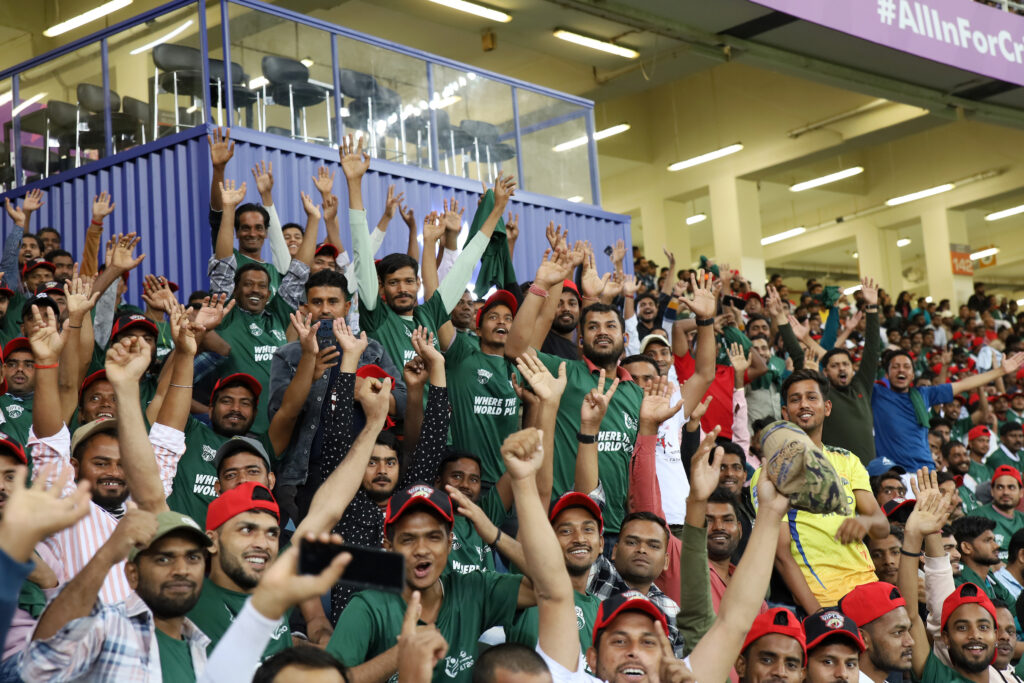
Fans during Match 17 of the DP World International League T20 between the Abu Dhabi Knight Riders and the Desert Vipers, held at the Zayed Cricket Stadium, Abu Dhabi, United Arab Emirates, on 16th December 2025.
Photo by CREIMAS / ILT20
RESTRICTED TO EDITORIAL USE
On Khuzaima Bin Tanveer taking a wicket from the first ball of the match and his overall performance in the tournament so far:
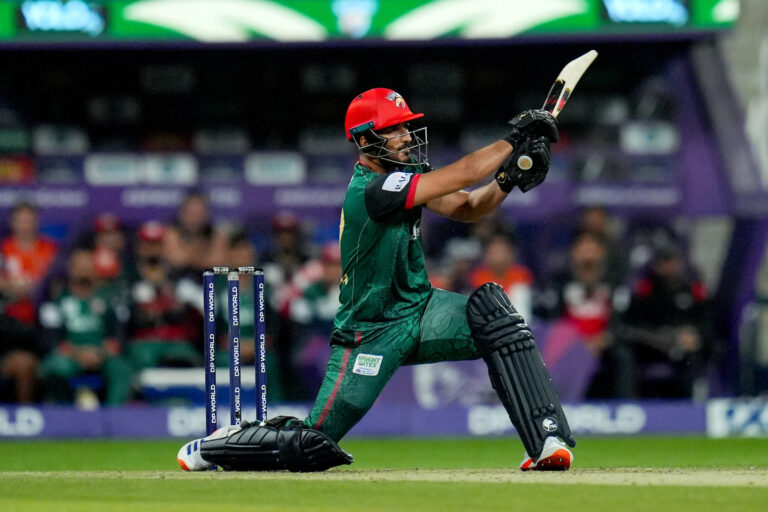
“He (Khuzaima Bin Tanveer) has been great. He was amazing last season and so he came into this season with a bit more expectation on his shoulders. But he has been rising to it, even tonight with the bat, he almost got us over the line at the end.
“The thing I love about Kuzzi (Khuzaima Bin Tanveer) is that even though we have good days and bad days on the field, the process and the mentality he has behind his game is great and I just see him going from strength to strength.
“He is learning from his mistakes very quickly; he understands that even though it is T20 cricket, there is still some patience needed when he swings the ball like he does. I have seen him grow through this tournament, and I hope he continues to grow through the finals for us.
“I am not surprised he is at the top of the wicket-takers (for the DP World ILT20 with 11 wickets so far), but I hope it continues for him, and even past this tournament, I am sure he will do really well.”
The Desert Vipers next play the Sharjah Warriorz at the Dubai International Stadium on Saturday, December the 20th, starting at 6:30 pm.
Tickets for all Desert Vipers matches are now available here
Our Sustainability Match was a magnificent occasion. As an event, it took a lot of organising, months of preparation and we’re thankful to everyone – players, opposition, the DP World ILT20 league, and sponsors – who made it such a memorable day.
In between all the chaos, activations noise – and the match! – were a small group of wonderful People of Determination who we invited, many of whom were attending their first ever cricket match. Their smiles, enthusiasm and unbridled joy will stay with us, and have inspired us to do much more in the future. So we shall.
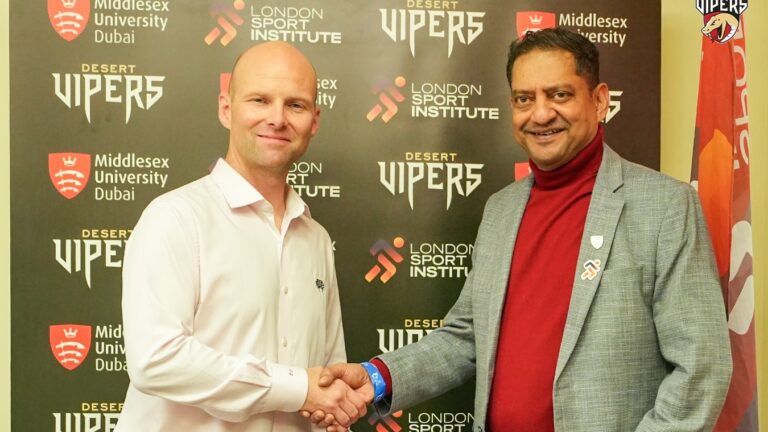
The Desert Vipers, one of six cricket teams that compete in the UAE’s DP World ILT20 tournament, are pleased to announce a strategic partnership with Middlesex University (MDX) Dubai, the emirate’s largest UK university with more than 6,400 students from more than 120 countries.
Middlesex University Dubai joins the Desert Vipers as their Elite Sport Performance & Academic Research Partner.
Reflecting a vision shared by both institutions to promote sustainability and reduce environmental impact, the collaboration spans cricket development and high-performance training both on- and off-field. It was signed in the presence of Phil Oliver, the Desert Vipers CEO, and Professor Cedwyn Fernandes, Pro Vice-Chancellor of Middlesex University and Director of MDX Dubai.
On the sporting side, the Desert Vipers will offer students the chance to train with elite cricket coaches gaining first-hand experience in high performance, strength and conditioning, and various aspects of athletic development. The collaboration also includes a link to the London Sports Institute in Dubai, creating new pathways for students across the UAE and UK.
In addition to sporting excellence, sustainability represents a key pillar of the partnership. The Desert Vipers continue to lead by example in embedding sustainable practices across sport, from removing single-use plastics and switching to recycled materials in team kits, to partnering with environmentally conscious organisations and cutting down carbon emissions. Collaborative initiatives will be developed between the Vipers and MDX Dubai to minimise the environmental footprint of large-scale cricket events.
MDX Dubai’s School of Art and Design will also partner with the Desert Vipers to design upcycled merchandise, eco-friendly fan apparel, and products crafted from repurposed cricket equipment.
Students specialising in sports studies meanwhile will be granted opportunities to analyse the professional environment of a Twenty20 cricket franchise, gaining valuable insights into the methods employed by an elite sports team in preparing and maintaining athletes for international competition.
Phil Oliver welcomed MDX Dubai to the Vipers community and said he was looking forward to a series of collaborative projects across multiple domains: “We are pleased to announce our partnership with Middlesex University Dubai. This collaboration represents a logical progression in our commitment to engaging with young people and supporting the local community, particularly in the areas of sustainability and sporting excellence.
“We look forward to sharing our cricketing expertise with MDX Dubai students, providing them access to a professional environment and opportunities to learn from our elite coaches and training staff. Furthermore, our shared dedication to sustainability, coupled with the University’s innovative initiatives in this area, positions us well to collaborate and make a positive impact both for the planet and its people.”
Professor Cedwyn Fernandes added: “Our partnership with the Desert Vipers reflects a shared vision of excellence and responsibility – both on and off the field. Together, we are harnessing the power of education and sport to inspire meaningful action for sustainability, innovation, and community development in the UAE and beyond.”
About Middlesex University (MDX) Dubai
Middlesex University (MDX) Dubai is the first overseas campus of Middlesex University in London. The university opened in 2005 and has 6,400+ students from 120+ nationalities.
Accredited by the UAE Ministry of Higher Education and Scientific Research (MoHESR) and licensed by Dubai’s Knowledge and Human Development Authority (KHDA), the university expanded to Dubai International Academic City (DIAC): their Global MBA Study Hub.
The university offers two globally recognised MBA programmes: the Daytime Delivery programme, which has intakes in September, January, and April; and the Executive MBA, which is taken in the evenings. Both programmes provide a dynamic learning experience, expert faculty, and preparation for leadership roles in the global landscape.
The university offers a range of programmes including Accounting, Business, IT, Data Science, Psychology, Law, Media, Fashion and more across foundation, undergraduate, postgraduate and MBA level. MDX Dubai provides an unrivalled student experience, blending British education with the diverse culture of Dubai.
In this episode we hear from Head Coach James Foster as he reflects on the Vipers making it six wins from six starts this season, courtesy of a five-wicket victory against the Dubai Capitals at the Dubai International Stadium.
The success ensures the Vipers have qualified for the end-of-season play-offs but there is still work to be done to make sure of a top-two berth that would guarantee two opportunities to reach the final.
The Desert Vipers have set a new record for most successive wins in a DP World ILT20 season after a sixth straight victory, this one achieved in their annual Sustainability Match. The Vipers defeated the Dubai Capitals by five wickets with two balls to spare, chasing a target of 167.
Sam Curran was awarded Player of the Match for his unbeaten knock of 52, along with a superb showing with the ball, where he took two wickets and gave away just 17 runs in three overs.
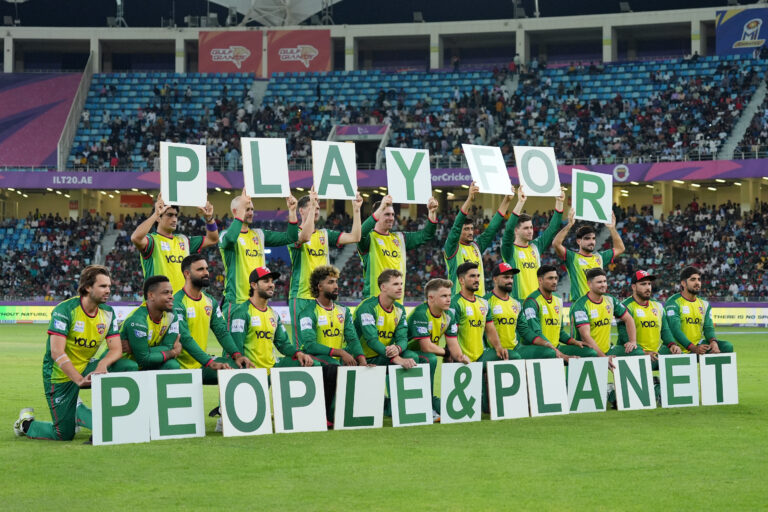
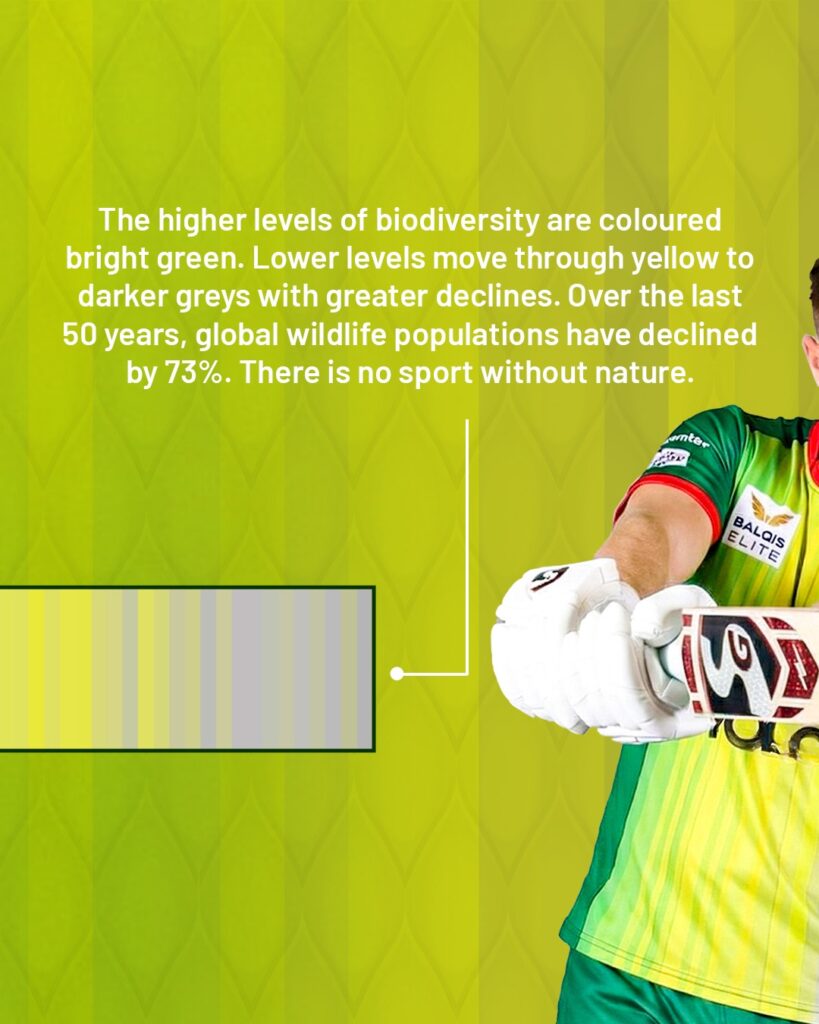
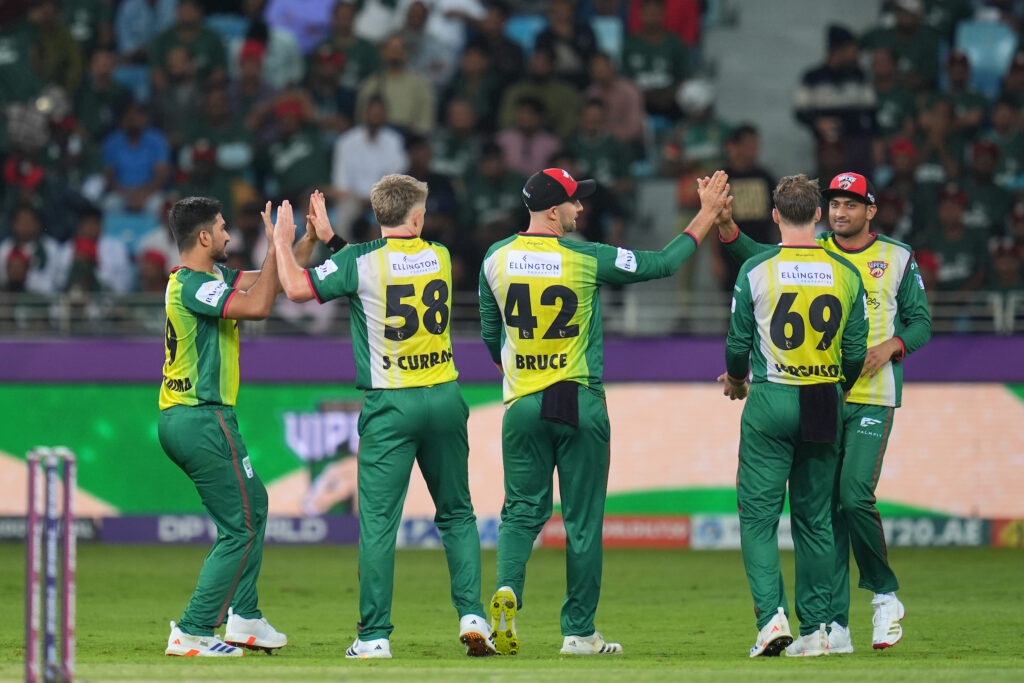
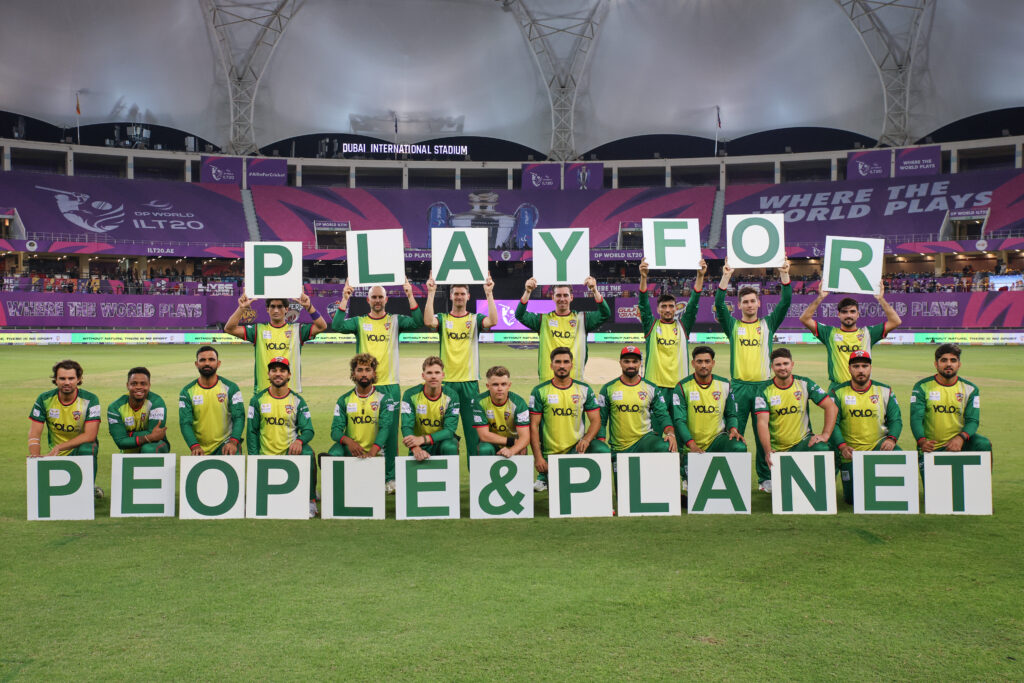
Earlier the players donned a special match kit for the annual Sustainability Match inspired by the ‘Biodiversity Stripes’ representing the decline of global wildlife populations.
Speaking about the annual event, Desert Vipers CEO Phil Oliver said he was proud of what the team had achieved so far: “We started this initiative over two years ago now, turning the Desert Vipers into the most sustainable cricket franchise in the world. We have made great progress, but we know there is a lot more to do.
“Our focus this year is very much on conservation and biodiversity. We have played in green for the whole tournament this time, and rather than making our Sustainability Match a one-off green thing, we thought we would do something very special and focus on nature and conservation which is now a central part of what we are doing as a franchise.
“As well as connecting with local communities throughout the schools programme, our talent pathway, and working with a wide range of local companies, we are working very hard to make the connection between nature and sport. Because if there is something that I want everyone to take away from today, it is the notion that there is no sport without nature.”
Desert Vipers Head of Strategy Matt Bailey added: “We are lucky to have a really strong suite of partners behind us that support us in our work. It was a delight to see Carrefour Majid Al Futtaim, the leading supermarket here in the UAE. They are a returning partner of the team.
“And the focus of our work with them is around healthy eating and nutrition for young people. It is called the Bright Bites campaign. They have really fun characters, healthy snacks and special lunch boxes.
“We have agreed an important partnership with Middlesex University, where they are bringing in sports science to their curriculum in a very exciting way through an initiative that launches next January with a high-performance centre and strength and conditioning training. That is just another example of an amazing community partner that we have here in Dubai.
“The RAW Coffee Company is also another key partner and the exercise bike powering up their activation in the fan village was enjoyable. That partnership is about wellness through fitness and our effort there is to have a positive impact on the communities around us.”
The kit featured in the team photo before the match, where players held placards saying ‘Play for People and the Planet’ to emphasize their commitment to sustainability.
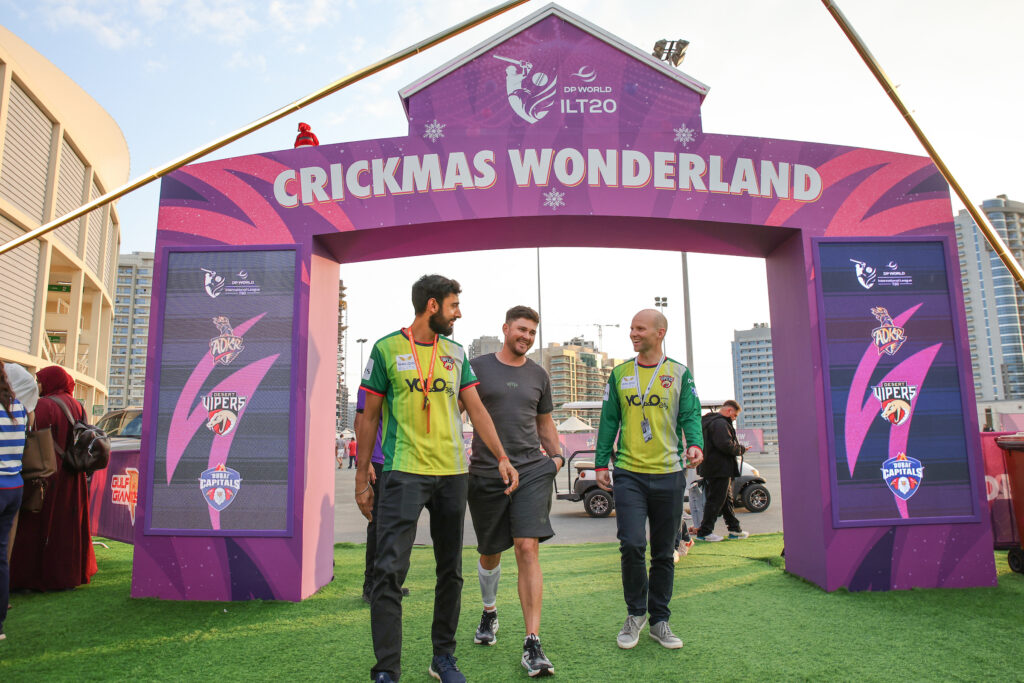
While fans packed the stadium, the Crickmas fan zone was bustling with activations organised by the Desert Vipers along with the DP World ILT20.
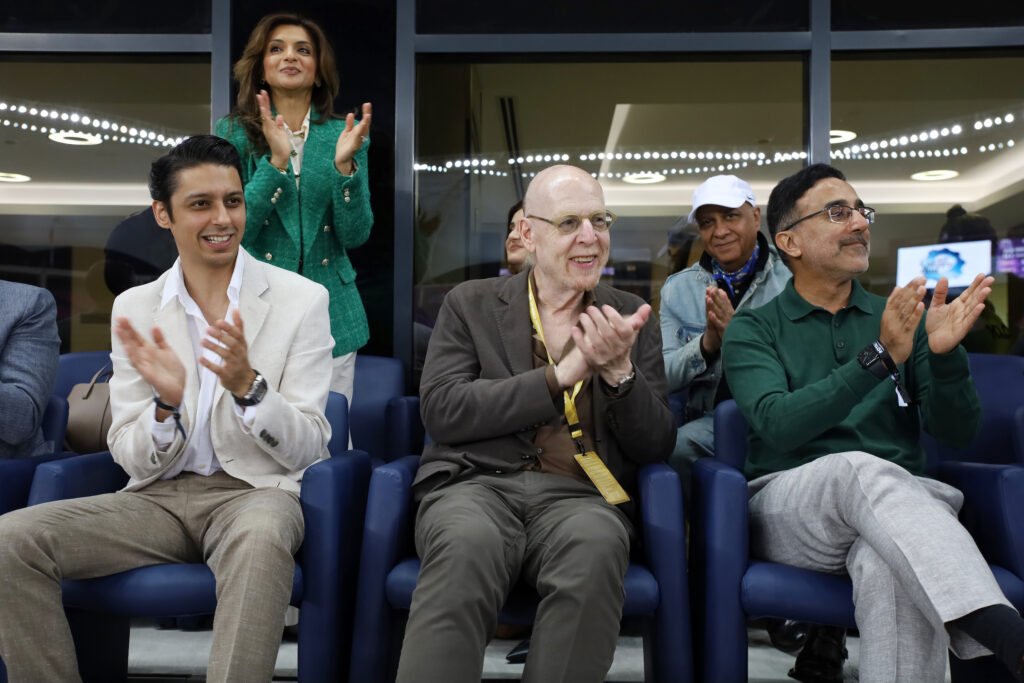
The partners of the Desert Vipers showed their support for the team’s sustainability efforts. Middlesex University handed out giveaway packs, while Bright Bites —Carrefour’s healthy snacking brand for children — sold nutritious snacks and hosted games where kids could win goodie bags.
The RAW Coffee Company’s “cycle-to-charge” activity was extremely popular, inviting visitors to test their fitness with the reward of a tasty coffee after a brief workout.
Additionally, top coaches from the Vipers’ elite Talent Pathway Programme offered free coaching and fitness sessions for children in the fan zone.
On the field, the Vipers restricted the Capitals to 166 for four in their 20 overs before knocking off the runs, the match concluding with a Sam Curran six.
Here is a quick review of the match:
Match Scores:
Toss: Desert Vipers
Dubai Capitals: 166/4 (20 overs)
Top scorer: Leus du Plooy 54 (44 deliveries)
Top wicket-taker: Sam Curran 2-17
Desert Vipers: 171/5 (19.4 overs)
Top scorer: Sam Curran 52 not out (33)
Match Result: Desert Vipers won by five wickets
Player of the Match: Sam Curran
Here are some quotes from the Vipers Voices post-match vodcast and podcast featuring Head Coach James Foster:
On winnings six games on the trot:
“We are very happy. Six from six, if you had said the team would be here at the start of the campaign, I would have been absolutely over the moon. It was a challenging win today, against a good team on a challenging pitch. We adapted and got the win, so I am delighted.”
On how to avoid complacency setting in after qualifying for the play-offs with six wins in a row:
“You just keep resetting after every game. We all go about our business. We do our research on the opposition, collectively and individually, whatever that might be.
“We prepare, we try and work out the right combinations to take on the opposition in the conditions. We just keep going about our business. Being six from six, there is no downside in that.
“As long as we are aware, and we have been, of a few areas that we can potentially improve on, that is exciting. We are playing well, and I also feel like there is more to come, which excites me as a coach, but also excites the group.”
Looking ahead to match against Abu Dhabi Knight Riders on Tuesday:
“They are a very dangerous team, like every other team. It would be foolish to turn up and just expect us to rock up and for a win to happen. We will be prepared, we will be doing our due diligence.
“You do not take anything for granted in this game, and if you do, it is a very, very risky ploy. They are a dangerous outfit. They will be wanting to win some games, so they will be coming hot.
“They have got match-winners top to tail with the ball and with the bat, so we are going to have to turn up there, be engaged, be switched on and give it our best shot.”
The Desert Vipers announce a new partnership with Carrefour, which Majid Al Futtaim owns the exclusive rights to operate in the UAE. Carrefour will join as the Official Healthy Snacking Partner for the upcoming Season 4 of the DP World ILT20, actively promoting healthier lifestyle choices and inspiring better eating habits among children.
This partnership aligns with the Desert Vipers’ mission of working towards a healthy future for people and the planet. Through the collaboration, Bright Bites product range – available exclusively at Carrefour – will be available across Desert Vipers’ matchday activations, community events, schools’ programmes, and digital content, aiming to reach families, youth athletes, schools, and communities across the UAE.
Bright Bites is Majid Al Futtaim’s pioneering grocery retail ecosystem, and the world’s first supermarket designed especially for kids, that blends shopping, learning, and play, to inspire better eating habits, smarter food choices, and positive lifelong associations with more nutritionally balanced food.
Phil Oliver, Desert Vipers CEO, welcomed the new partners into the Desert Vipers family, and said: “We are delighted to partner with Carrefour to help empower children to make better choices. The Desert Vipers, too, are committed to educating and encouraging children in schools across the UAE to be healthier through exercise and eating right.”
He added: “We have a robust Schools Programme here in the UAE where we engage with thousands of children. While cricket is at the heart of our programme, sustainability and healthy living are also spoken about at great length. Offering children, the chance to build healthier eating habits early and giving them a range of tasty, nourishing snacks to pick from showcases how Bright Bites aligns perfectly with the Desert Vipers philosophy.”
Dr. Günther Helm, Chief Executive Officer at Majid Al Futtaim – Retail, added: “This marks our second year partnering with the Desert Vipers at the DP World ILT20, and we are pleased to continue a collaboration that is both meaningful and purposeful. Through Bright Bites, we aim to empower children to make informed food choices and build positive, lifelong associations with more nutritionally balanced options. Our goal is to make better choices more accessible, more appealing, and more engaging for children, families, and sports enthusiasts across the community. Bright Bites aligns closely with the UAE Vision 2031 – advancing health, education, and sustainability – and directly supports the UAE National Nutrition Strategy 2020–2030”.
This initiative aims to drive positive impact, promoting balanced nutrition and active living amongst the youth and wider community.
Disclaimer: All facts and figures in this release are accurate at the time of issuance.
Note to the Editor: The legal name of this company is “Majid Al Futtaim” and should not be shortened or replaced by an acronym to avoid confusion with another business entity.
Majid Al Futtaim Retail
Founded in 1992, Majid Al Futtaim is an Emirati-owned, diversified lifestyle conglomerate operating shopping malls, communities, retail and leisure outlets, across the Middle East, Africa and Asia. The Group employs 43,000 people, with owned assets valued at US$19 billion, and has the highest credit rating (BBB) among privately held corporates in the region.
Majid Al Futtaim Retail holds the exclusive rights to operate Carrefour across 10 markets in the Middle East, Africa, and Asia, with a network of over 390 stores. It is also the owner and operator of HyperMax, a new grocery retail brand with over 44 locations in Jordan, Oman, Bahrain and Kuwait. Additionally, the Group operates Supeco, its latest grocery retail concept—a low-cost hybrid model that combines a traditional supermarket with a wholesale warehouse—across 17 locations in Egypt, and Myli, the Group’s health and beauty brand, operating in 12 stores across Asia and North Africa.
To meet the growing needs of its diverse customer base and communities, Majid Al Futtaim Retail offers omnichannel customer experiences tailored to the needs of the modern consumer. Through its innovative physical and digital customer services, Majid Al Futtaim Retail provides access to an unrivalled choice of quality products, at unbeatable value for over 700,000 customers it serves daily.
Aligning with the Group’s commitment to support local economies, local producers and suppliers, Majid Al Futtaim Retail resources over 80 percent of its products from the region.
In this episode we hear from Max Holden, who made an unbeaten 64 from 41 balls to help the Vipers to a fifth win in five matches, this time against the Gulf Giants at the Dubai International Stadium.
Max shared an unbroken stand of 123 for the third wicket with Sam Curran (67 not out) as the Vipers won eight wickets with 3.1 overs in hand.
Earlier, Khuzaima Bin Tanveer produced a sensational spell of bowling, capturing four for 10 as the Vipers restricted the Giants to 157 for seven. Those wickets meant he secured the player of the match award and he took over as the holder of the white belt for the top wicket-taker in the tournament, with his tally now standing at 10.
Despite a 60-run victory by Middlesex University Dubai, both teams showcased impressive sportsmanship, with several standout performances on the field.
Middlesex University Dubai are the Desert Vipers’ Elite Sport Performance & Academic Research Partner, and this collaboration has been built around cricket development and high performance training both on and off the field.
This friendly contest was an opportunity for the young players to test their skills in match conditions.
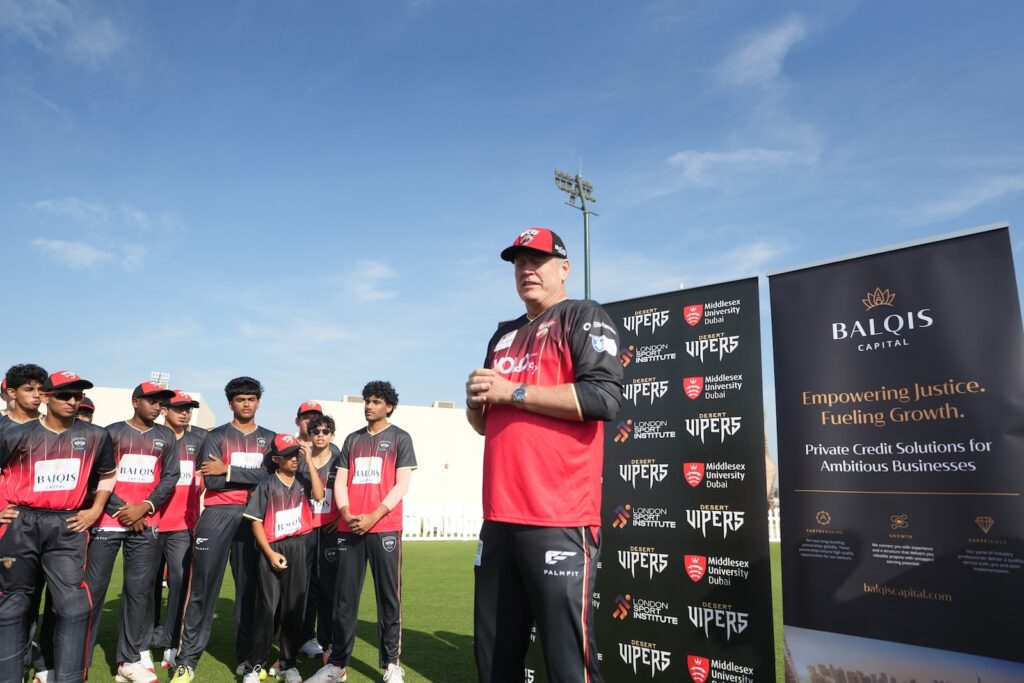
The Vipers Pathway team arrived in style in the bus that is usually reserved for the senior team, currently playing in the DP World ILT20. The match was played at a brand new facility at JA Lake View, the Vipers’ home, and the Desert Vipers coaching staff – including Director of Cricket Tom Moody, Strength and Conditioning (S&C) Coach Daz Veness and Fielding Coach Simon Helmot – spent time with the players ahead of the match.
The coaches conducted focused specialist sessions, providing players with valuable insight into senior team training practices.
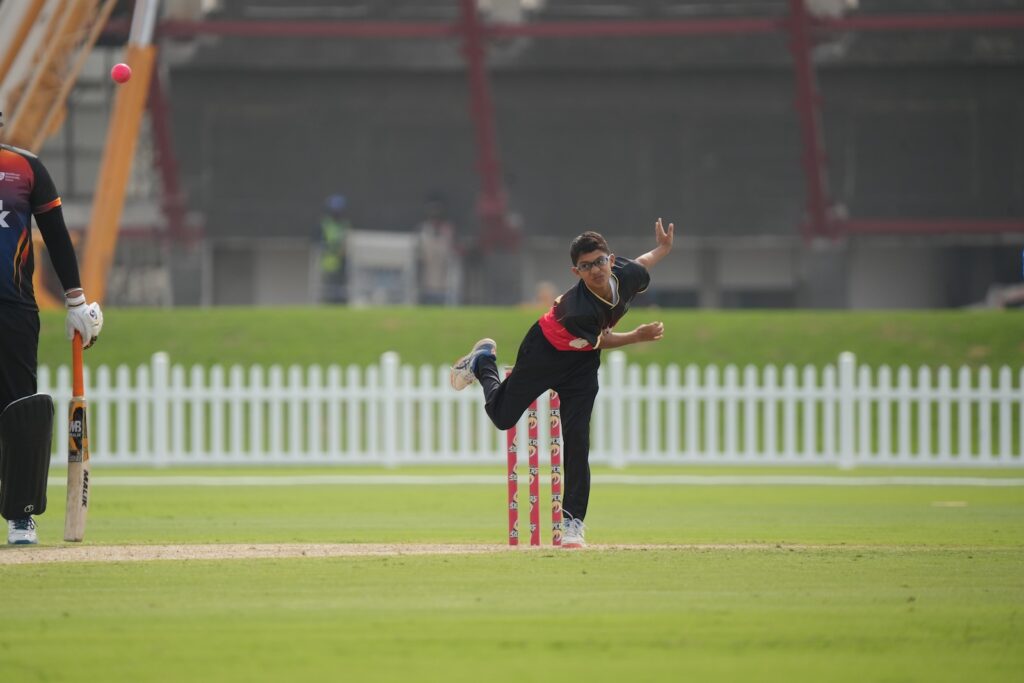
Facing an experienced Middlesex University Dubai team, the young Vipers side (average age 14), made an impact with both the bat and ball.
14-year-old off-spinner Ishaan Garge stood out (3-4). He took three wickets in his two overs at an impressive economy rate of 2.
With the bat 15-year-old Vivaan Khanna (also the oldest player on the Vipers side) and 14-year-old Advay Kumat shared a crucial 61 run partnership as the Vipers Talent Pathway team chased a target of 167 runs. They fell short by 60 runs, but it was still a valuable experience for all those involved.
At the end of the contest, the players had the chance to meet and take photos with the Desert Vipers main squad, who stopped at the match venue on the way to their training session at the ICC Academy.