Scotland’s Mark Watt ready to bring Associate players into the spotlight at the ILT20 – ”I am looking forward to representing the associates and hopefully show that we belong there.’’

Famous for his little hand-written notes on opposition players and impressive bowling performances at the T20 World Cup, Scotland’s star left-arm spinner Mark Wattis ready to shine on behalf of the Associates with the Desert Vipers at the inaugural ILT20.
In a candid chat with the Vipers Voices podcast Watt, who is one of only two Scotland bowlers to take over fifty T20I wickets, said he was most pleased about the ILT20’s decision to feature Associates and also Emirates players who often miss out on participating in major tournaments.“From the T20 World Cup gone by, everyone can see that Associates can play,” said Watt. “We are not there to just make up the numbers anymore, we are there to compete and take down these big nations.“I think it is a great idea (to have a quota of Associate and Affiliate players, plus Emirates players in squads, with a minimum of two Emirates players in each starting line-up), and I am really looking forward to representing one of the Associates and hopefully, show that we belong there.”Watt went on to explain the notes he carried with him during the T20 World Cup: “I have used it (the notes) since last year’s World Cup (in the UAE). We played against India, and I spoke to (Ravichandran)Ashwin after the game, and he told me how much time he spends on analysis and figuring out where to bowl to each player. So, it is something that I tried to learn from him.“I did not go to University or College, so I thought I should do a bit of studying in my life. So, before a game I have a look at the footage and see what fields need to be set, and because I have got a terrible memory and I can’t remember each and every thing for each batter, I tend to write them down, and the camera seemed to like that and so did the people (watching) back at home.”The good news is that following a successful past 18 months, playing in two T20 World Cups in the UAE and Australia, Mark Watt comes into the tournament confident of a good showing. Watt said: “I feel on top of my game, I just want to keep improving at the moment. I want to play in as many franchises as I can, and work with top coaches like Carl Crowe, and be in as many good teams as I can and learn from some of the best spinners in the world. I feel really good, and I cannot wait for January.”Someone who will have a close eye on Watt is Desert Vipers spin-bowling coach Carl Crowe who, during the same Vipers Voices podcast, explained his own role in guiding and mentoring the spin bowlers on the squad, including the world’s top T20 bowler, leg-spinner Wanindu Hasaranga, UAE off-spinner Rohan Mustafa and left-arm wrist-spinner Jake Lintott.“In franchise cricket you have a very small window of opportunity to work with the players, especially prior to the tournament,” said Crowe.“When you work on technical interventions, they usually take longer, although I did work with Mark (Watt) in the T10, and we did work on a couple of small interventions. So, there can be small areas that you can touch up and fine tune, but mostly the work is tactical and mental, both of which link very nicely together.“These players are playing on a global stage where sometimes millions and sometimes tens of millions of people are watching, and if they can go into each game with clarity on what they want to achieve in the game, that gives them the best opportunity to be successful.“I have been very fortunate to work in a number of franchise tournaments, and to see how the best go about doing it. I know Mark already and I am looking forward to meeting the rest of the spinners and getting to know how they like to work. I think as a coach it is important to adapt to the players’ preferences to ensure they get the best out of the coach.”With one of the most powerful spin attacks in the tournament, Desert Vipers spin coach Carl Crowe believes there is room in a playing eleven for multiple spin specialists in the squad, including Scotland’s Mark Watt, Sri Lanka’s Wanindu Hasaranga, the UAE’s Rohan Mustafa and Jake Lintott from England. “Yes (multiple spinners can play in the starting eleven) because they all have complementary skills,” he said. “I know both Tom Moody and James Foster, are very innovative and creative in their approach to the game and if we decide as a group that the conditions and opposition allows us to do that, I cannot see why all of our squad in every game would not be up for selection.”With under three weeks to go before the Desert Vipers play their first match, Mark Watt admits he is really looking forward to playing on the same team as Wanindu Hasaranga. “Yes, I cannot wait, (to play alongside Wanindu Hasaranga). I just want to pick his brain and ask him about all his experiences, and maybe learn a few things about leg-spin. It really is exciting being on the same team as the best T20 bowler in the world. It is a great opportunity to learn. “Spin Coach Carl Crowe explains what makes Hasaranga, the number one T20I men’s bowler, so special. “One of the key factors is that he (Wanindu Hasaranga) has an unbelievably brilliant googly. A googly is king in mystery spin, and his is very difficult to read, as it has got a lot of deception.“He still has a good leg-spinner, has some good variations and he is a master of his skills. He also bowls the tough overs for his team. If you look at how teams have used him around the world, when the best players come in, he often comes on and takes on that challenge. It means he is clear about his plans and how he goes about doing things.“As a coach, you want to add value, and you do not want to come in and push your way. You come in and see quickly how he (Hasaranga) likes to work, and what makes him the best bowler in the world. My role would be to ensure he continues to maintain those levels, and the rest of the group can learn from him as well.”The Vipers Voices podcast features a full interview with Mark Watt and Carl Crowe and can be downloaded via this link:https://www.buzzsprout.com/2092289/11937939A full transcript of the interviews can be found below:Carl Crowe on his role as a T20 spin coach – is he there for technical work, a sounding board or as a mentor?
“I think it is all of the above really. One of things we talk about with the players is to be ready for anything at any stage. From a technical perspective, we do not have a lot of time to work with the players, so it is unlikely you would go into big detail on their game, although there may be some things that are required very quickly, and a slight adaptation (needs) to be made.“It is (the coaching role) about making sure the players are fully prepared and go into the game with a clear mind to be able to play at their best. Ultimately it is about making sure the player can go out and play with a clear mind and play what is in front of them. The work behind that might be multi-faceted, but it is what the player needs really.”Mark Watt on what he looks for from a spin bowling coach in T20 cricket:
“Mainly to just to help improve my skills in the time that I am going to be out there and learning different things. I have worked with Carl Crowe before in the T10, and we worked on a carrom ball, and I have just been working on that since then and hoping that it can come out better compared with when he (Crowe) saw me last. In the game, when playing against different players, it is just all about knowing what their skills are and he (Crowe) can help me figure that out.”Carl Crowe on how much of his work with spinners in this type of situation is technical, how much is tactical and how much is mental:
“In franchise cricket you have a very small window of opportunity to work with the players, especially prior to the tournament. When you work on technical interventions, they usually take longer, although I did work with Mark (Watt) in the T10, and we did work on a couple of small interventions. So, there can be small areas that you can touch up and fine tune, but mostly the work is tactical and mental, both of which link very nicely together. These players are playing on a global stage where sometimes millions and sometimes tens of millions of people are watching, and if they can go into each game with clarity on what they want to achieve in the game, that gives them the best opportunity to be successful.“I have been very fortunate to work in a number of franchise tournaments to see how the best go about doing it. I know Mark already and I am looking forward to meeting the rest of the spinners and getting to know how they like to work. I think as a coach it is important to adapt to the players’ preferences to ensure they get the best out of the coach.Mark Watt on whether spinners operate in all three phases of a T20 innings – power play, middle overs and at the death:
“In the past, spinners were used in a limited way, just in the middle phase, but now I think spinners are getting used in all phases of the game, as it has been found that they are definitely hard to play and in the conditions in UAE I do not see why this will not be the case. I have done it (bowled in all three phases of the game) before for Scotland and while it is definitely a challenge, it is a challenge I enjoy.”Carl Crowe on whether spinners operate in all three phases of a T20 innings – power play, middle overs and at the death:
“If you look back at T20 history, the economy rates of spin bowlers are better than that of seam bowlers. I am sure that is still the case. The only place where those stats might change a bit is in the death overs, when spin only bowls in the death if it is really advantageous for that. I think in the first 16 to 17 overs spinners can bowl, but during the death overs the reason to use spin has to be more specific, like there is a short boundary one side that is advantageous for spin, or it (the pitch) is still spinning, or if someone like Mark is bowling who can bowl yorkers very well. So, I think spinners are finding a way to bowl in the death as well, but in the powerplay spinners have been very successful if they have a clear plan.”Mark Watt on how he broke the internet during the T20 World Cup with his use of notes on the field. What was the idea, and did it work?
“I have used it since last year’s T20 World Cup (in the UAE). We played against India, and I spoke to Ashwin afterwards, and he told me how much time he spends on analysis and figuring out where to bowl to each player. So, it is something that I tried to learn from him. I did not go to University or College, so I thought I should do a bit of studying in my life. So, before a game I will have a look at the footage and see what fields need to be set, and I have got a terrible memory and I cannot remember each and every thing for each batter, so I tend to write them down, and the camera seemed to like that and so did the people (watching) back at home.”Carl Crowe on whether he looks to use the analyst &, if so, what he aims to get from that person:
“As a coach I should have as much information as possible, so I spend a lot of time with the analysts looking at every single bit of the batsman’s strengths and weaknesses. What you share with the players varies for each individual. I certainly like having as much information as possible, on the ground dimensions, player strengths and so many other factors that are to be considered. As a coach it is important to have that information, so if a player asks you, you can share your view. “Mark Watt on how many variations he has in his bowling:
“I have about four or five, that I should be using this January, hopefully.”Mark Watt on where he feels his game is at right now following a successful past 18 months, playing in two T20 World Cups in the UAE & Australia:
“I feel on top of my game (and) I just want to keep improving at the moment. I want to play in as many franchise tournaments as I can, and work with top coaches like Carl Crowe, and be in as many good teams as I can and learn from some of the best spinners in the world. I feel really good, and I cannot wait for January.”Carl Crowe on working with Rohan Mustafa, the UAE off-spinner and Wanindu Hasaranga, the Sri Lanka leg-spinner, and whether he has worked with them in the past:
“I have not worked with either of them before, but I have seen them play in other teams, Rohan Mustafa was bowling against us (Carl was coach of the New York Strikers and Rohan played for the Bangla Tigers) in the T10 and bowling very well. So, when James Foster said we were signing him on, I was most delighted about that. (The) same thing with Wanindu Hasaranga, I have been working with teams, playing against him, not with him, and I am really excited. As a spin coach, I also enjoy learning from these guys, and watching how they go about their skills, how they go about their training sessions, and I am looking forward to meeting them.”Carl Crowe on what makes Hasaranga so special as the number one T20I men’s bowler:
“One of the key factors is that he (Wanindu Hasaranga) has an unbelievably brilliant googly. A googly is king in mystery spin, and very difficult to read, as it has got a lot of deception. He still has a good leg-spinner, has some good variations and he is a master of his skills. He bowls the tough overs for his team. If you look at how teams have used him around the world, when the best players come in, he often come on and takes on that challenge. It means he is clear about his plans and how he goes about doing things. As a coach, you want to add value, and you do not want to come in and push your way. You come in and see quickly how he (Hasaranga) likes to work, and what makes him the best bowler in the world. My role would be to ensure he continues to maintain those levels, and the rest of the group can learn from him as well.”Carl Crowe on whether all four spinners – Hasaranga, Lintott, Mustafa and Watt – could end up playing in the same starting eleven:
“Yes (multiple spinners can play in the starting eleven) because they have complementary skills, and if the conditions and our approach allows for it. I know both Tom Moody and James Foster are very innovative and creative in their approach to the game and if we decide as a group that the conditions and opposition allows us to do that, I cannot see why all of our squad in every game would not be up for selection. They are different bowlers, Mark Watt can bowl at any stage of the game, Rohan Mustafa bowls brilliant at the death, and he has some great yorkers, and Wanindu Hasaranga is a threat to anybody.”Mark Watt on looking forward to playing on the same team as Wanindu Hasaranga:
“Yes, I cannot wait, (to play alongside Wanindu Hasaranga). I just want to pick his brain and ask him about all his experiences, and maybe learn a few things about leg-spin. It really is exciting being on the same team as the best T20 bowler in the world. It is a great opportunity to learn. “Mark Watt on the fact this tournament has ensured it will feature Associates and also Emirates players who do not necessarily get a look-in for major tournaments because they are not from the so-called bigger countries:
“I think it is a great idea. Just from the T20 World Cup gone by, everyone can see that Associates can play. We are not there to just make up the numbers anymore, we are there to play and take down these big nations. I think it is a great idea, and I am really looking forward to representing one of the Associates and, hopefully, show that we belong there.”Carl Crowe on how dew is often a factor in the UAE in January & February and if there is anything that can be done to prepare for it such as bowling with balls from a bucket of water during net sessions:
“In my experience when the ball is dewy, it also gets greasy, so I find that just putting the ball in a bucket of water does not quite replicate that grease. So, what I have tried a couple of times is rubbing some sunscreen on the ball to make it a bit greasy, and that seemed to replicate the effect on a ball going into the dewy outfield. So that is something with which we will experiment. I think spinners can still be very effective, even with the dew, particularly if you have bowlers who bowl wicket to wicket nicely and sliding it on, then it becomes very difficult to hit. So, I think we must practice with it, and make sure we are prepared for it, so if the dew does come, we have found ways to prepare to be successful in those conditions.”Mark Watt on the Desert Vipers squad and whether it can be successful at the ILT20:
Mark Watt: It is pretty star studded and I cannot wait to meet everyone and learn off everyone and bowl in the nets and pick their brains and just get as much out of it as possible. I think if you look at that line-up it is one of the best there, and I do not see why we cannot go the whole way and lift the trophy at the end.Carl Crowe on the Desert Vipers squad and whether it can be successful at the ILT20:
“I am just excited to join the management and a fantastic group of players and have a great time and set the tone hopefully for many years ahead.”About the Desert Vipers
Owned by Lancer Capital, The Desert Vipers team is one of six to compete at the inaugural ICC-sanctioned ILT20 tournament to be held in the UAE in January-February 2023. Cricket Director Tom Moody and Head Coach James Foster lead operations in the star-studded Desert Vipers camp, which includes players like Sam Billings, Wanindu Hasaranga, Alex Hales, Colin Munro, Tom Curran, and Sheldon Cottrell. Other key staffing appointments include Azhar Mahmood (fast bowling coach), Carl Crowe (spin bowling coach), Simon Helmot (fielding coach), and Neil McKenzie (batting coach).For more information please contact:
Brian Murgatroyd & Roshni Jayakrishnan:media@thedesertvipers.com
”I am never going to stop my dream of playing for England,” says Desert Vipers all-rounder Benny Howell
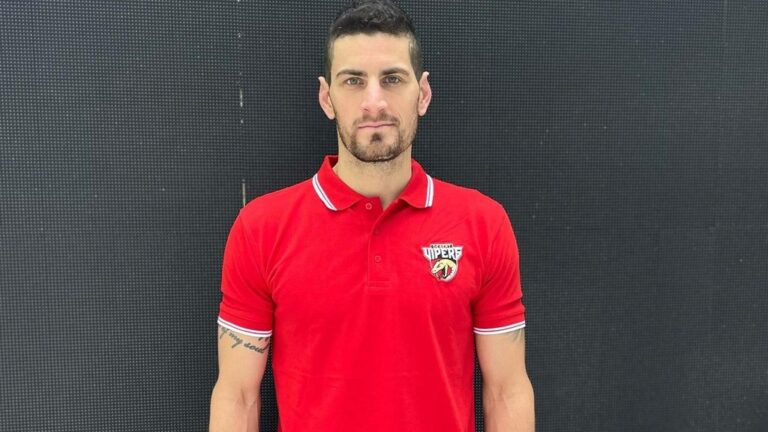
Desert Vipers all-rounder Benny Howell wants to use the upcoming DPWorld ILT20 as a springboard to achieve his dream of playing international cricket.
Speaking to the Vipers Voices podcast, the 34-year-old, who has played more than 180 shortform matches across the world, said: “I am never going to stop my dream of wanting to play for England. I guess all I can do is play well in the tournaments I am selected to play in and perform as much as I can.“I know I was close to getting involved (with England) in the (T20) World Cup. It was amazing to see them win (and if I want to be involved) I just have to keep performing with the bat and ball and see what happens.”Howell, who has played T20 cricket in the UK, Bangladesh, Pakistan, Sri Lanka, and Australia, is someone known for his innovative approach to the game, including the use of heavy balls and bats to train. “I am a big advocate for the heavy bat, and the heavy balls, which a guy called Julian Wood uses.“Julian is a power-hitting coach for players like me, who come in down the order and try to hit fours and sixes. I use the technique a lot just to get the juices flowing and get the feeling of hitting the ball hard. So, it is about finding the right balance at the right time during training.”And the player, who will arrive at the DP World ILT20 off the back of helping the Colombo Stars to the final of the Lanka Premier League, where it lost out to defending champion the Jaffna Kings, said he was also constantly on the look-out to develop more variations in his bowling.“I have about four different grips for my normal medium-pace run up, and within those four different grips I will adjust my hand positions, and angles of my arms, to make the ball do different things,” he said.“At the moment I am working really hard on adding a couple more styles of bowling, because I want to bowl quick leg-spin as well. I have been working on it for a few years, and I bowled it in the BPL (Bangladesh Premier League) last year. Also, off-spin, with some carrom balls, to the left-handers especially. So that is something I am working on for this tournament.”Howell is often seen as a T20 specialist, but he still believes he could have a shot at selection for the 50-over Cricket World Cup in 2023. “Maybe (and) that is why I want to adapt my bowling styles to include spin as well as my hybrid medium-pace.“So, in ten overs I can bowl different balls and different styles and become more than one bowler in a spell. I do not want to look too far ahead, but it (50-over Cricket World Cup in 2023) is definitely on my radar.”Howell who picked the ILT20 over the other global leagues such as the BBL in Australia, the BPL in Bangladesh, and the South African franchise league, said he believed the involvement of Associate and Affiliate cricketers in the UAE tournament represented an important innovation for the growth of cricket.“It is great (that Associate and Affiliate cricketers, including players from the UAE are involved in the ILT20) and increasing the participation around the world,” he said. “There are a lot of talented players over here. Afghanistan over the last few years have really come up and now in the UAE there are a lot of good players. It is exciting to get more nations involved and increase the cricketing world.”The Vipers Voices podcast features a full interview with Benny Howell and can be downloaded via this link:https://www.buzzsprout.com/2092289/11929784A full transcript of the interviews can be found below:
Benny Howell on why he opted to play in the ILT20 in the UAE With a whole host of tournaments going on around the world, including the BPL, the Big Bash League in Australia, and the new South African franchise tournament:
“A couple of reasons: I heard a lot about this competition, and that there were a lot of class players playing in it, which means you are going to be challenged and I like to be challenged. The second reason was that I got offered before any of the drafts, so it was an offer that was hard to turn down. I am very happy to be working under Tom Moody as he has worked with me in Bangladesh in the past, so that was a big convincer for me as well.”Benny Howell on whether it was a tough decision, since he has been a regular in the past in the BPL and had a very successful campaign with Chattogram last winter, especially with the bat:
“Not so much, because at the time that I got offered to play for the Desert Vipers, I was not sure when the BPL was on, and whether it was at the same time as this tournament (ILT20), and it is on at the same time as this. No, it was not that tough (to choose) because this is a new tournament, and a new challenge and I enjoy new challenges.”Benny Howell on whether his role with the Desert Vipers will be as a finisher with the bat and during the middle overs with the ball:
“Most likely (I see myself batting at number 7 in a finisher’s role) because I don’t think they would have picked me in the side if they were going to put me in a new role, but I guess I will have a chat with Tom Moody, and James Foster, the coaches, and managers, and see where they think my role would be. I am happy to adapt to whatever they need.”Benny Howell on whether he opted to play in the T10 tournament in Abu Dhabi to help in acclimatization ahead of the ILT20 or whether it was just the way the cards fell:
“Just the way the cards fell (that I opted to play for the T10 tournament). There was a T10 draft, and I played for the Bangla Tigers last year and I really enjoyed playing for the franchise in the T10. The T10 is a really amazing tournament, it is short and sharp, and it definitely prepares you in a really intense way for T20 cricket, so it is a bonus for that as well.”Benny Howell on what he makes of the Desert Vipers line-up – and what chance he gives the side of doing something special in the inaugural edition of the tournament:
“I was chatting with (Desert Vipers captain) Colin Munro, and we were discussing how the side looks pretty strong. I guess all the sides are going to be quite strong, but I do like the look of our side, so let us hope we can perform on that.”Benny Howell on which Desert Vipers team-mates he has played with previously, and if there is anyone, he is especially looking forward to lining up with for the Desert Vipers:
“I played with Alex Hales in the BPL a few years ago for the Rangpur Riders, I enjoyed playing with him, and I am looking forward to playing alongside him again.”Benny Howell on the prospect of facing his captain in The Hundred, Moeen Ali, who will play for Sharjah:
“I am not particularly looking forward to bowling to him, no, but we will see how it goes! But if I do get a chance to bowl to him, I will have to be at my best performance.”Benny Howell on what he thinks of the Desert Vipers backroom staff, including Director of Cricket Tom Moody, Head Coach James Foster, batting coach Neil McKenzie and seam bowling coach Azhar Mahmood:
“It sounds pretty good to me. I worked with Tom Moody before in the BPL when he was coach, for with the same side (Rangpur Riders) when I was with Alex Hales, and I really enjoyed working with him. I look forward to getting to know him again even more during the competition. I also worked with James Foster briefly, in Bangladesh, when he was the fielding coach for another team. I played with Neil McKenzie years ago at Hampshire, and he is a funny (humorous) man, and I am looking forward to meeting him again.”Benny Howell on how he goes about practicing preparing for his role with the bat, and whether it is just a case of walking into a net and trying to hit every ball for four or six, or a bit more scientific than that:
“I am still learning what is the best way is (to approach a practice session), because you want to practice like you are in a game, and that means you might face only five or ten balls. But at the same time, you want to get your good practice in. I am trying to find a balance between having a good nice long practice session, a good long hit, and sometimes going into the nets and hitting the first few balls for a four or a six.“I am a big advocate for (using) a heavy bat and heavy balls which a guy called Julian Wood uses, who is a power hitting coach for players like me, who come in down the order and try to hit fours and sixes. I use the technique a lot just to get the juices flowing and get the feeling of hitting the ball hard. So, it is about finding the right balance at the right time during training.”Benny Howell on how he got involved with coach Julian Wood:
“It was a few years ago. He is brilliant, he will throw to you, and he will give you the ideas of how it works, and where you should hit the ball and contact points. Basically, what the use of heavy balls does is it exaggerates the way you are hitting the ball, and if you are hitting it well with a heavy ball, it really feels good and it will stick on the bat, but if you do not (hit the ball well) you feel like you are going to drop the bat. It is a really good indicator of whether you are hitting the ball well or not.”Benny Howell on the principle behind using heavy bats in practice:
“If you see baseball hitters, when they are waiting to go into the batter’s box, they put these heavy rings on their bats and they practice swinging. So, I guess when you get your own bat it feels really light, and it feels really good. Whether it is scientifically proven or not I am not sure, but it really makes batters feel good.”Benny Howell on working with a batting or bowling coach in T20 cricket:
“In a tournament that is only a month long, the best coaches watch every individual closely and adapt their coaching styles to those individuals. So, for myself, it would be just them being present and seeing what I do with the bat, and if they can see anything that I cannot see, so they can give me some advice or tips. The other side (of their role with me) is how we go about the game tactically, what is the game plan on these wickets, against a particular bowler or batter, and the mental side of things.”Benny Howell on whether he is familiar with UAE conditions, and what he is expecting the conditions to be like:
“I know from playing in the T10 last year that the wickets were pretty good, but they can skid quite low, so then you have to adjust your lengths (as a bowler) accordingly. If you float the ball up, you cannot really rely on any swing, or the slowness of the pitch, to get you out of trouble, because the ball travels as well here (in the UAE). So, you have to adjust your length accordingly to the wickets. Generally (the best way is to bowl) back of length, skidding in and with good change-ups. That is pretty good.”Benny Howell on whether he uses bats with a lower middle in them:
“Luckily, because I bat down the order, I actually get a bat with a low middle because bowlers more often than not are going to try and bowl yorkers at the death. So, I generally have that (bat with a low middle) that suits the conditions here because the ball is staying low, so it is probably going to hit there on the bat. That is probably what I would do.”Benny Howell on his main asset as a bowler:
“All the variations (I have), I guess (are my main assets as a bowler). A lot of the time the batter is not sure what is coming down. But I think what a lot of people forget that I still need to be effective with my line and length too. I like to believe I am quite accurate with where I am bowling, and I put in a lot of research before every game to know what the strengths and weaknesses of the batters are. I then adjust my bowling styles to those batters. It does not always come off but if I do the right research and put in the work beforehand then I can go into the game with a free mind and have a clear plan.”Benny Howell on how many variations he has as a bowler, and whether it is a trade secret:
“I have about four different grips for my normal medium-pace run up, and within those four different grips I will adjust my hand positions, and angles of my arms, to make the ball do different things. At the moment I am working really hard on adding a couple more styles of bowling, because I want to bowl quick leg-spin as well. I have been working on it for a few years, and I bowled it in the BPL last year. Also (I have been working on) off-spin with some carrom balls, to the left-handers especially. So that is something I am working on for this tournament.”Benny Howell on how important it is that this tournament, unlike so many others, openly embraces Associate and Affiliate cricketers, and the inclusion of UAE cricketers, in every starting line-up:
“It is great (that Associate and Affiliate cricketers, including UAE cricketers, are involved in the ILT20) and increasing the participation around the world. There are a lot of talented players over here. Afghanistan over the last few years have really come up and now in the UAE there are a lot of good players. It is exciting to get more nations involved and increase the cricketing world.”Benny Howell on his own aspirations as a player – and whether he believes that a decent showing in tournaments like the ILT20 can catapult him into the selection conversation:
“I am never going to stop my dream of wanting to play for England. I guess all I can do is play well in the tournaments I am selected to play in and perform as much as I can. I know I was close to getting involved in the (T20) World Cup. It was amazing to see them (England) win. I just have to keep performing with the bat and ball and see what happens.”Benny Howell whether he is now exclusively a T20 player or whether he still has ambitions in the other formats:
“I would not say I am exclusively a T20 player, but I have signed a white-ball contract with Hampshire with the option to play red-ball cricket if things work out. I injured my hamstring in 2019, I tore it off the bone, and that is actually the time I stopped playing four-day cricket. I felt I could not get through more than 10-12 overs in a day. So, I went towards T20 cricket, and being selected there. I would not say my ambitions are over with red-ball cricket. At the moment T20 cricket is the focus, because of the winter tournaments, but when summer comes around, we will see how it goes, because I am interested in playing red-ball cricket for my county.”Benny Howell on whether the 50-over Cricket World Cup in 2023, is on his radar:“Maybe (and) that is why I want to adapt my bowling styles to include spin as well as my hybrid medium-pace. So, in ten overs I can bowl different balls, and different styles, and become more than one bowler in a spell. I do not want to look too far ahead, but it (50-over Cricket World Cup in 2023) is definitely on my radar.”About the Desert Vipers
Owned by Lancer Capital, The Desert Vipers team is one of six to compete at the inaugural ICC-sanctioned ILT20 tournament to be held in the UAE in January-February 2023. Cricket Director Tom Moody and Head Coach James Foster lead operations in the star-studded Desert Vipers camp, which includes players like Sam Billings, Wanindu Hasaranga, Alex Hales, Colin Munro, Tom Curran, and Sheldon Cottrell. Other key staffing appointments include Azhar Mahmood (fast bowling coach), Carl Crowe (spin bowling coach), Simon Helmot (fielding coach), and Neil McKenzie (batting coach).For more information please contact:
Brian Murgatroyd & Roshni Jayakrishnan:media@thedesertvipers.com
The Desert Vipers congratulate Ben Duckett for an England one-day International call-up
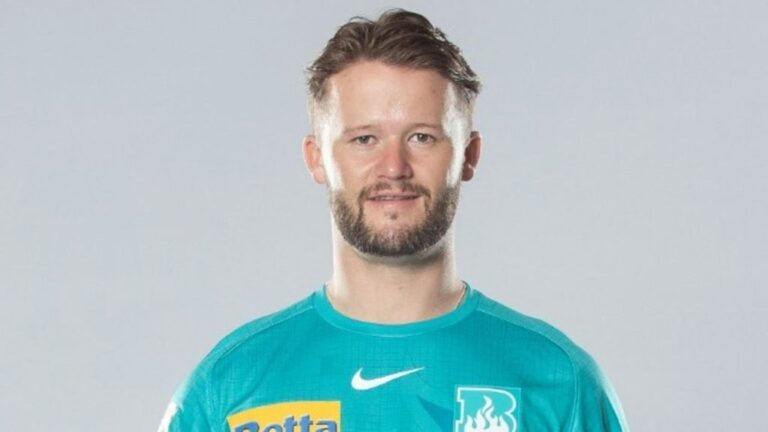
The Desert Vipers congratulate Ben Duckett for his recall to the England One-Day International (ODI) squad for the three-match series in South Africa.
Ben’s selection for matches in Bloemfontein (27 and 29 January) and Kimberley (1 February), his first time in the ODI squad since 2016, means he will miss the inaugural ILT20, and while the Vipers squad will miss his presence, it is a proud moment for the team as well.CEO Phil Oliver said: “We are very pleased for Ben Duckett, and we wish him the very best for the series in South Africa. We look forward to having him in our ranks for season two.”Director of Cricket Tom Moody said that while it was disappointing to lose a player of Ben’s ability, the situation was one the Desert Vipers were well prepared for.“You have to be nimble in these situations,” he said. “It certainly can be a challenge for us all to be creative, to be nimble and to be ready to have the options available to us when the unexpected does arise.“The coaches, managers and fans of the Desert Vipers might be writing down what a preferred eleven might be for the first match, but I can assure you that preferred eleven will change between now and the first game as that is the nature of franchise cricket.“There are things that do crop up that are unexpected, whether that be injury or unavailability due to selection with the national set up, an illness – it could be anything –and that is why it is important to have depth in your squad.“We are fortunate to have a great relationship with CricViz who can present us with a series of alternatives for any one of our squad members.“In Ben’s absence we have Dinesh Chandimal, who can bat anywhere in the order and can keep wicket. That is why we say it is a squad that wins a championship and not an individual.”About the Desert Vipers
Owned by Lancer Capital, The Desert Vipers team is one of six to compete at the inaugural ICC-sanctioned ILT20 tournament to be held in the UAE in January-February 2023. Cricket Director Tom Moody and Head Coach James Foster lead operations in the star-studded Desert Vipers camp, which includes players like Sam Billings, Wanindu Hasaranga, Alex Hales, Colin Munro, Tom Curran, and Sheldon Cottrell. Other key staffing appointments include Azhar Mahmood (fast bowling coach), Carl Crowe (spin bowling coach), Simon Helmot (fielding coach), and Neil McKenzie (batting coach).For more information please contact:
Brian Murgatroyd & Roshni Jayakrishnan:media@thedesertvipers.com
Episode 7 – Tom Moody on Gus Atkinson, Jake Lintott & Dinesh Chandimal
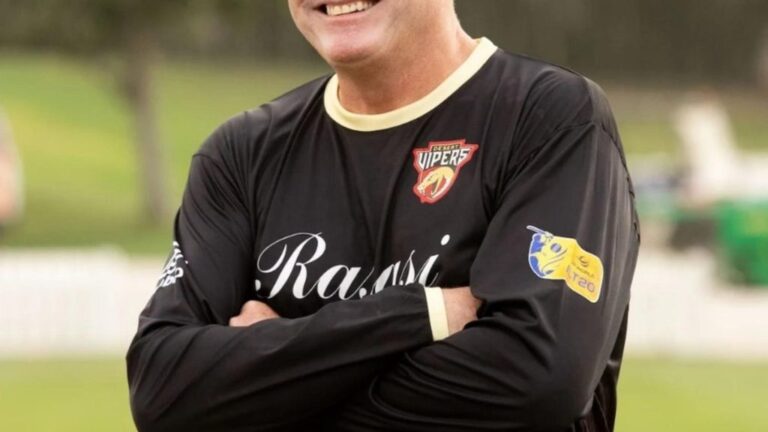
This special bonus episode of Vipers Voices is all about three new signings for the Desert Vipers – former Sri Lanka captain and utility batsman Dinesh Chandimal, fast bowling all-rounder Gus Atkinson and left-arm wrist spinner Jake Lintott.Director of Cricket Tom Moody takes us through each of the players, why they were on the Vipers’ radar and what they will bring to a squad that’s already got plenty of quality about it.And there’ll be in-depth interviews with the trio in the next episode of Vipers Voices too – so that’s something to look forward to!
Episode 8 – Rasasi named as principal sponsor & interviews with Gus Atkinson, Jake Lintoff & Dinesh Chandimal

In this episode we announce details of the Desert Vipers’ agreement with Rasasi Perfumes to become the franchise’s Principal Sponsor. Rasasi was founded in Dubai in 1979 and now has 165 outlets across the region as well as exporting to more than 60 countries. It’s an iconic UAE brand and the perfect fit for the Desert Vipers as a UAE side playing in a UAE tournament.We hear from Vipers CEO Phil Oliver, who appeared on Emirates News on the Dubai One TV channel to announce the sponsorship agreement and provide an update on the side’s progress towards its first match on 15 January, and we also have fascinating interviews with the three new players announced this week – Warwickshire left-arm wrist-spinner Jake Lintott, former Sri Lanka captain Dinesh Chandimal and Gus Atkinson, the Surrey fast-bowling all-rounder.
Episode 9 – Benny Howell

In this episode we chat with all-rounder Benny Howell who, thanks to his abilities as a middle-order finisher with the ability to find and clear the boundary and his subtle variations as a medium-pacer, has become a sought-after player in short form cricket around the world.Benny is arriving in the UAE for the ILT20 off the back of time at the Abu Dhabi T10 for the Bangla Tigers and the Lanka Premier League with the Colombo Stars, who finished as runners-up in that tournament, eventually losing a thrilling final to defending champions the Jaffna Kings.In a fascinating interview, Benny talks about his training methods – including the use of heavy balls when batting – his burning desire to play for England, his bowling variations and also his hopes for the ILT20.It’s a terrific, honest chat and well worth a listen.
Episode 3 – Rohan Mustafa

In this special bonus episode of the Vipers Voices podcast, we reflect upon the announcement of the Desert Vipers’ four UAE players for the tournament – Rohan Mustafa, Ronak Panoly, Sheraz Ahmad and Ali Naseer.Rohan is the UAE’s leading run-scorer and wicket-taker in Twenty20 Internationals, teenagers Ronak and Ali both featured in the UAE under-19 side that played in the ICC Under-19 Cricket World Cup in the Caribbean in January 2022, and Sheraz is an experienced left-arm seamer who has played previously in both the Bangladesh Premier League and the Lanka Premier League.In this podcast we speak in depth with Rohan as he looks forward to the action getting underway in January.
Episode 4 – Colin Munro named as Desert Vipers captain

This episode is all about the new Desert Vipers captain Colin Munro.The New Zealand batter was chosen by Director of Cricket Tom Moody and Head Coach James Foster to lead the side in the inaugural edition of the ILT20 and we hear from both Colin, as he reflects on his appointment, and Tom, as he explains what made him the stand-out candidate for the top job.